What Actually Makes a Great Yoga Teacher?
Most new yoga teachers think becoming better means learning more poses, taking more trainings, or memorizing more cues. While those things matter, they aren't what students remember most. After years of teaching and mentoring teachers, I've come to believe that great teaching begins somewhere else.
I've been around yoga long enough to notice a pattern. When teachers first graduate from a 200-hour training, many of them believe the next step is knowing more.
More poses. More anatomy. More philosophy. More creative sequences. More certifications.
I understand why. I believed that too.
I remember thinking that if I could just learn enough, one day I'd finally feel like a "real" yoga teacher.
So I kept collecting information.
Another workshop. Another book. Another training. Another notebook full of ideas I was convinced would make me better.
And while every one of those experiences taught me something valuable, none of them answered the question I was really asking.
"What actually makes someone a great teacher?"
It certainly wasn't the number of poses they knew. It wasn't the fanciest transitions. It wasn't the person who could pronounce every Sanskrit word perfectly.
In fact, some of the teachers who left the deepest impression on me weren't the ones who seemed to know the most.
They were the ones who made people feel seen.
That's a very different skill.
And I think it's one we don't talk about enough.
“The teachers who leave the deepest impact aren’t always the ones who know the most. They’re the ones who make people feel seen.”
Knowledge Matters. But It's Not the Whole Story.
Please don't misunderstand me.
Knowledge matters.
Learning anatomy matters. Understanding movement matters. Studying philosophy matters.
I hope we never stop learning.
But knowledge is only useful if it changes the experience of the person standing in front of us.
I've watched teachers deliver beautifully constructed classes that left students feeling disconnected. ( I’ve been this teacher )
I've also watched teachers make small mistakes, forget which side they were on, laugh about it, and somehow leave the room feeling more connected than anyone else. ( I’ve been this teacher too )
Why?
Because students rarely remember every cue we gave. They remember how they felt while we were teaching.
“Students rarely remember every cue we gave.
They remember how they felt while we were teaching.”
Did they feel safe? Did they feel judged? Did they feel rushed? Did they feel invisible?
Or did they feel like someone was genuinely paying attention?
That's the difference.
Teaching isn't simply transferring information. It's creating an environment where people can learn.
And that's a much more human skill than many of us were taught.
The Skill I Think We Undervalue
If I had to choose one ability that separates experienced teachers from newer ones, it wouldn't be flexibility.
It wouldn't be confidence. It wouldn't even be cueing.
It would be observation.
Noticing before reacting. Watching before correcting. Getting curious before making assumptions.
It's surprisingly difficult. Our instinct is to fix.
Someone's knee turns in. We cue it.
Someone wobbles. We jump in.
Someone looks around the room. We assume they're distracted.
Sometimes we're right. Sometimes we're not.
Before You Teach Your Next Class
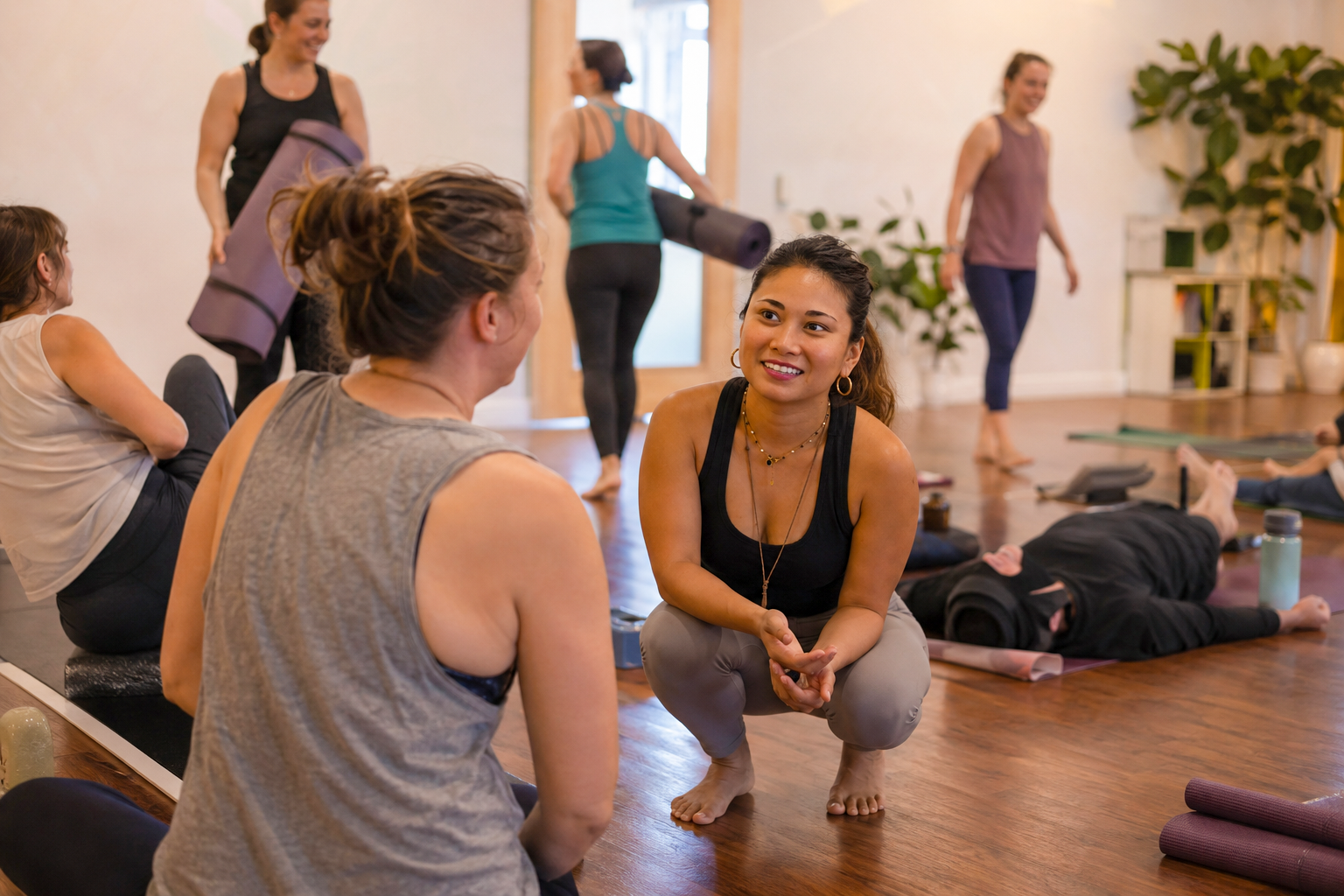
The next time you teach, choose one student and simply observe them for a few breaths before saying anything.
Notice how they breathe. Notice where they hesitate.
Notice where they seem confident. Notice where they seem uncertain.
Resist the urge to immediately fix, explain, or correct.
Just observe.
You may discover that what looked like a problem was simply a different way of moving.
Observation isn't passive.
It's one of the most active skills we develop as teachers.
The longer I teach, the more comfortable I've become with asking myself a simple question before I say anything.
"What am I actually seeing?"
That one question has probably changed my teaching more than any certification I've ever completed.
“Great teaching begins long before the first cue.”
If You Remember One Thing…
Great teaching isn't measured by how much we know.
It's measured by how well we notice, how clearly we communicate, and how safe people feel in our presence.
Everything else grows from there.
Continue Learning
If this article resonated with you, here are a few places to continue your journey. Whether you're looking for practical teaching tools or ready to deepen your understanding through mentorship and continuing education, I'd love to support you.
You May Also Enjoy